
CNC Oblique Cutting Saw: Core Technology, Features & Selection
Keywords: CNC oblique cutting saw, CNC aluminum oblique cutting machine, precision CNC miter saw, CNC profile cutting saw, automatic CNC oblique cutting equipment
In modern metal processing, precision, efficiency, and automation are essential. The CNC oblique cutting saw combines CNC technology with oblique cutting capabilities to deliver exceptional accuracy, consistency, and productivity—eliminating human error and streamlining production. It is indispensable for high-end manufacturing, construction, and industrial applications requiring strict cutting standards.
This concise guide covers the core essentials of CNC oblique cutting saws, including definition, working principle, key features, applications, and selection tips—helping manufacturers, engineers, and buyers make informed decisions.
What Is a CNC Oblique Cutting Saw?
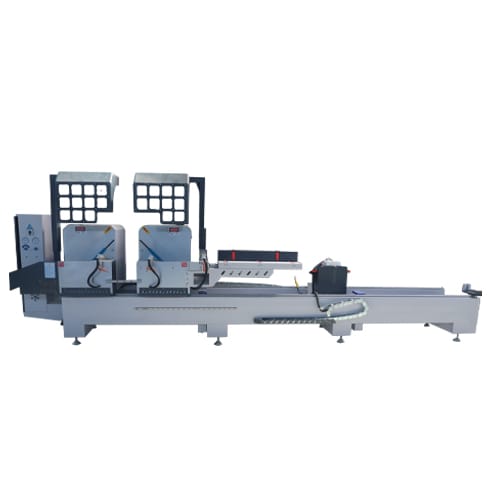
A CNC oblique cutting saw is a high-precision automated machine for angled (oblique) cuts on metal profiles (aluminum, steel, copper, stainless steel). It uses CNC control for automated positioning, angle adjustment, and cutting, ensuring consistent accuracy (error ≤ 0.05°) and burr-free edges—ideal for mass production and high-precision tasks. It is widely used in aluminum door/window manufacturing, curtain wall processing, and automotive component production.
Working Principle of CNC Oblique Cutting Saws
The fully automated process follows a simple, precise cycle:
1. Programming & Parameter Setting
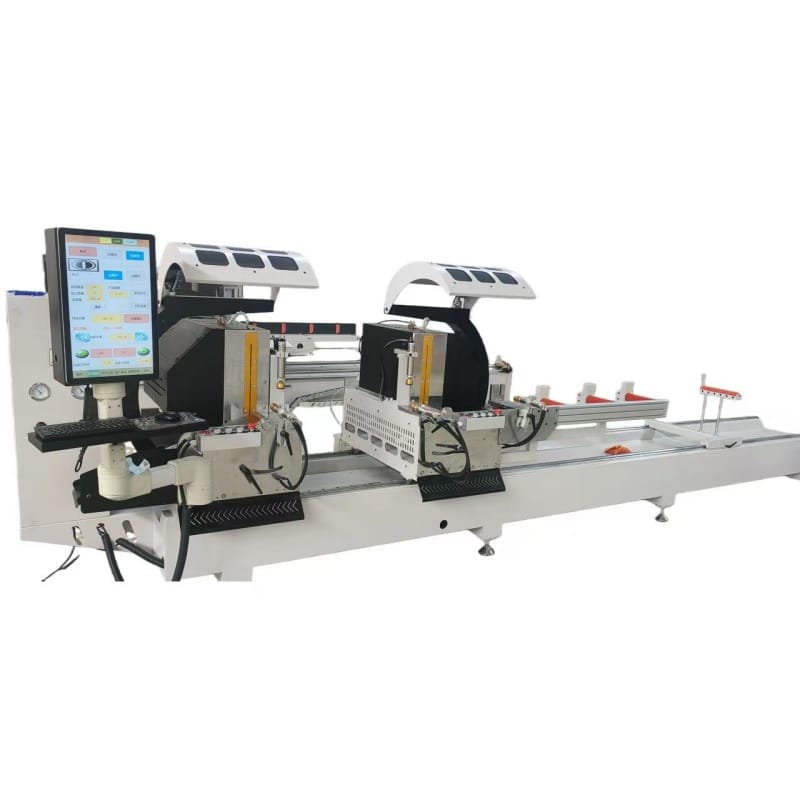
Operators input cutting parameters (angle: 0°–45°+ in 0.1° increments, length: ≤0.1mm accuracy, speed, quantity) via a touch screen. Parameters are stored for quick reuse in batch production.
2. Profile Feeding & Positioning
Profiles are fed automatically (belt/roller) to the cutting area, positioned precisely by the CNC system, and secured by a pneumatic/hydraulic clamp to prevent movement.
3. Angle Adjustment & Cutting
The saw head adjusts to the preset angle via servo motors (no backlash), verified by a precision encoder. A high-speed carbide-tipped blade (3,000–5,000 RPM) cuts the profile, with water/air cooling to reduce burring and blade wear.
4. Finishing & Unloading
After cutting, the clamp releases, and the profile is unloaded (automatic conveyor or manual). The system resets for the next cut, completing the cycle.
Key Features of CNC Oblique Cutting Saws
High-quality CNC oblique cutting saws offer these core features:
1. High-Precision CNC Control
Professional CNC systems (Siemens, Mitsubishi) with intuitive touch screens, supporting programming, batch processing, fault diagnosis, and real-time monitoring.
2. Servo Drive & Precision Transmission
Servo motors ensure high positioning accuracy (≤0.05° angle, ≤0.1mm length). Precision ball screws and linear guides reduce vibration and wear.
3. Automatic Feeding & Clamping
Adjustable automatic feeding (0–10m/min) and uniform pneumatic/hydraulic clamping prevent profile deformation and ensure stability.
4. Quality Blade & Cooling
300–500mm carbide-tipped blades for clean cuts; water/air cooling extends blade life and prevents material warping.
5. Safety & Versatility
Safety features (emergency stop, protective cover, infrared sensors) ensure safe operation. Compatible with 20mm×20mm to 200mm×200mm profiles, suitable for diverse applications.
Advantages of CNC Oblique Cutting Saws
- Precision & Consistency: Error ≤0.05°, no human error, ensuring seamless assembly.
- High Efficiency: 50–70% faster than traditional saws, handling 500–1,000 cuts/day with reusable parameters.
- Reduced Labor Costs: Minimal operator intervention, no need for highly skilled workers.
- Burr-Free Cuts: Eliminates post-cut deburring, improving product quality.
- Safety & Reliability: Multiple safety protections and durable components minimize downtime.
Application Scenarios
CNC oblique cutting saws are widely used in:
- Aluminum door/window manufacturing (window frames, railings)
- Curtain wall and building decoration (aluminum/steel profiles)
- Automotive/aerospace components (high-precision cuts)
- Industrial machinery (machine frames, brackets)
- Furniture/hardware manufacturing (metal profiles, accessories)
How to Choose the Right CNC Oblique Cutting Saw
- Production Scale: Small/medium (500–1,000 cuts/day) → single-head; large-scale → double/multi-head.
- Cutting Capacity: Match profile size (width×height) and material (aluminum/steel).
- Precision & Control: Choose servo drive and reputable CNC systems for tight tolerances.
- Automation: Opt for automatic feeding/unloading for large-scale production.
- Component Quality: Prioritize high-quality servo motors, ball screws, and blades.
- Brand & After-Sales: Select ISO/CE-certified brands with timely support.
Conclusion
The CNC oblique cutting saw is a vital tool for modern metal processing, blending precision, automation, and efficiency. It adapts to diverse industries and helps manufacturers enhance productivity, reduce costs, and deliver superior products. As technology evolves, it will continue to meet the growing demand for high-precision cutting.