
Aluminum Alloy Multi-Angle CNC Cutting Machine | 2026 Tech Guide
In modern aluminum profile processing, the aluminum alloy multi-angle CNC cutting machine has become an indispensable core equipment, replacing traditional manual and semi-automatic cutting tools with its high precision, automation and high efficiency. It solves the pain points of inaccurate angle cutting, low production efficiency and high material waste in aluminum processing, and is widely used in doors and windows, new energy vehicles, photovoltaic and other industries. This article will interpret its core technical advantages, working principles, application scenarios and selection tips to help manufacturers quickly grasp key information.
Core Technical Advantages of Aluminum Alloy Multi-Angle CNC Cutting Machine
The biggest highlight of this equipment lies in its precision and automation performance, which is far better than traditional cutting machinery. Equipped with a servo motor and helical rack drive system, it achieves an angle accuracy of ±0.03°, with a linear cutting accuracy of ±0.05mm and repeat positioning accuracy within 0.03mm, fully meeting the high-precision cutting needs of complex aluminum profiles.
In terms of efficiency, the 10-inch touchscreen CNC control system supports one-key programming, DXF/CAD file import, and can store more than 100 groups of processing programs, realizing automatic feeding, cutting and blanking. The optimized clamping design reduces the tailings length to less than 5mm, greatly improving aluminum material utilization and reducing production costs. In addition, the fully enclosed protective cover and dust collection system meet industrial safety and environmental protection standards, with a noise level of ≤78dB(A) and a dust collection rate of over 95%.
Working Principle & Main Components
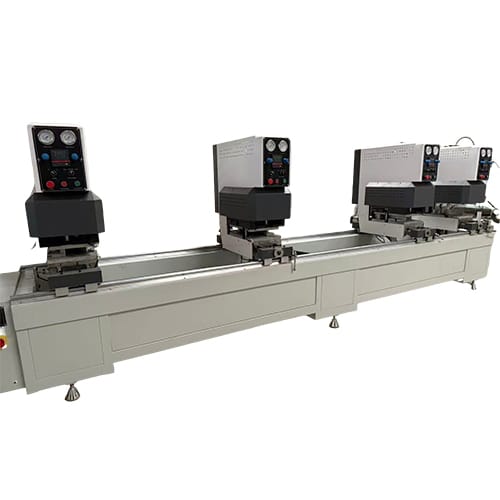
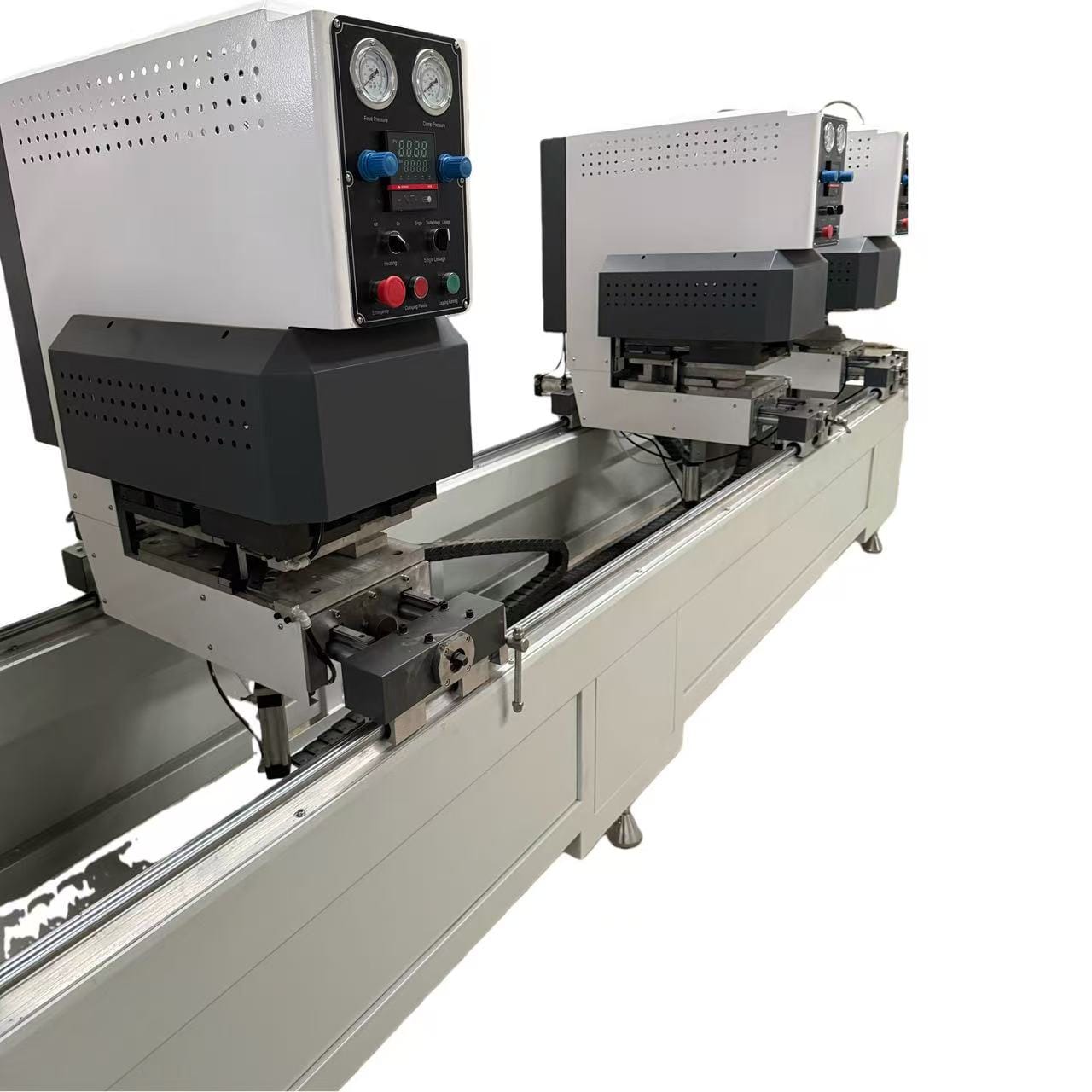
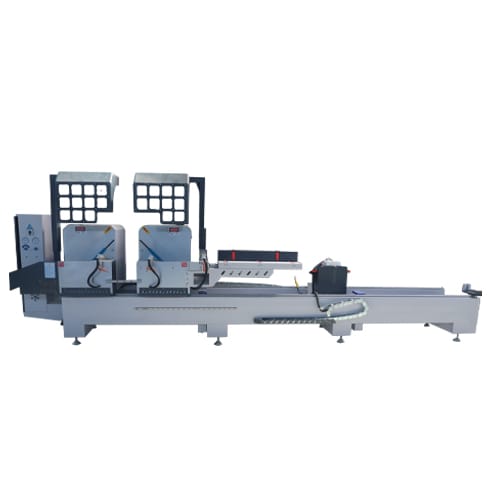
The aluminum alloy multi-angle CNC cutting machine is mainly composed of a heavy-duty frame, cutting head, feeding system, clamping device and CNC control system. The cast iron main frame is treated by stress relief, ensuring stable operation and minimal vibration during cutting. The servo-driven cutting head can realize arbitrary angle cutting within 22.5°-157.5°, and some high-end models support 360° omnidirectional cutting.
The pneumatic clamping system firmly fixes the aluminum profile to avoid displacement during cutting; the precision linear guide and ball screw drive the feeding system, ensuring stable and accurate feeding. The CNC control system is the “brain” of the equipment, coordinating the operation of each component, and can switch between manual and automatic modes, which is simple and easy to operate, reducing the technical requirements for operators.
Widely Used in Multiple Industrial Scenarios
- Aluminum Doors, Windows and Curtain Walls: It can quickly complete 45°/90°/135° angle cutting of frame profiles, with smooth cut surfaces and no burrs, ensuring seamless assembly of doors and windows, suitable for large-scale residential and commercial engineering projects.
- New Energy Vehicles: For cutting aluminum alloy battery trays, anti-collision beams and chassis parts, it meets the lightweight and high-precision processing needs of automotive manufacturing.
- Photovoltaic Solar Industry: Precise cutting of photovoltaic frames and bracket profiles, helping enterprises control costs and improve the assembly efficiency of solar modules.
- Rail Transit: Applied to the processing of aluminum alloy structural parts of high-speed rails, meeting the strict quality requirements of the rail transit industry.
Practical Selection & Maintenance Tips
When purchasing an aluminum alloy multi-angle CNC cutting machine, manufacturers should focus on 4 key points: first, confirm the maximum profile size that the equipment can handle to match their own processing materials; second, select the angle range and accuracy level according to processing needs; third, choose single-head or double-head models based on production capacity (double-head models can double the efficiency); fourth, prioritize equipment with perfect after-sales service and spare parts supply.
In daily maintenance, clean aluminum chips and check the dust collector every day, lubricate linear guides and ball screws weekly, replace worn saw blades in time, and calibrate angle and positioning accuracy monthly, which can effectively extend the service life of the equipment and avoid processing errors caused by mechanical wear.
Final Thoughts
With the continuous development of high-end manufacturing and lightweight industries, the demand for aluminum alloy multi-angle CNC cutting machines will continue to rise. For aluminum processing enterprises, choosing a high-quality, high-precision CNC cutting machine is an effective way to improve product quality, reduce costs and enhance market competitiveness. In the future, with the integration of AI and IoT technology, this equipment will develop towards smarter and more automated directions, bringing greater value to industrial processing.